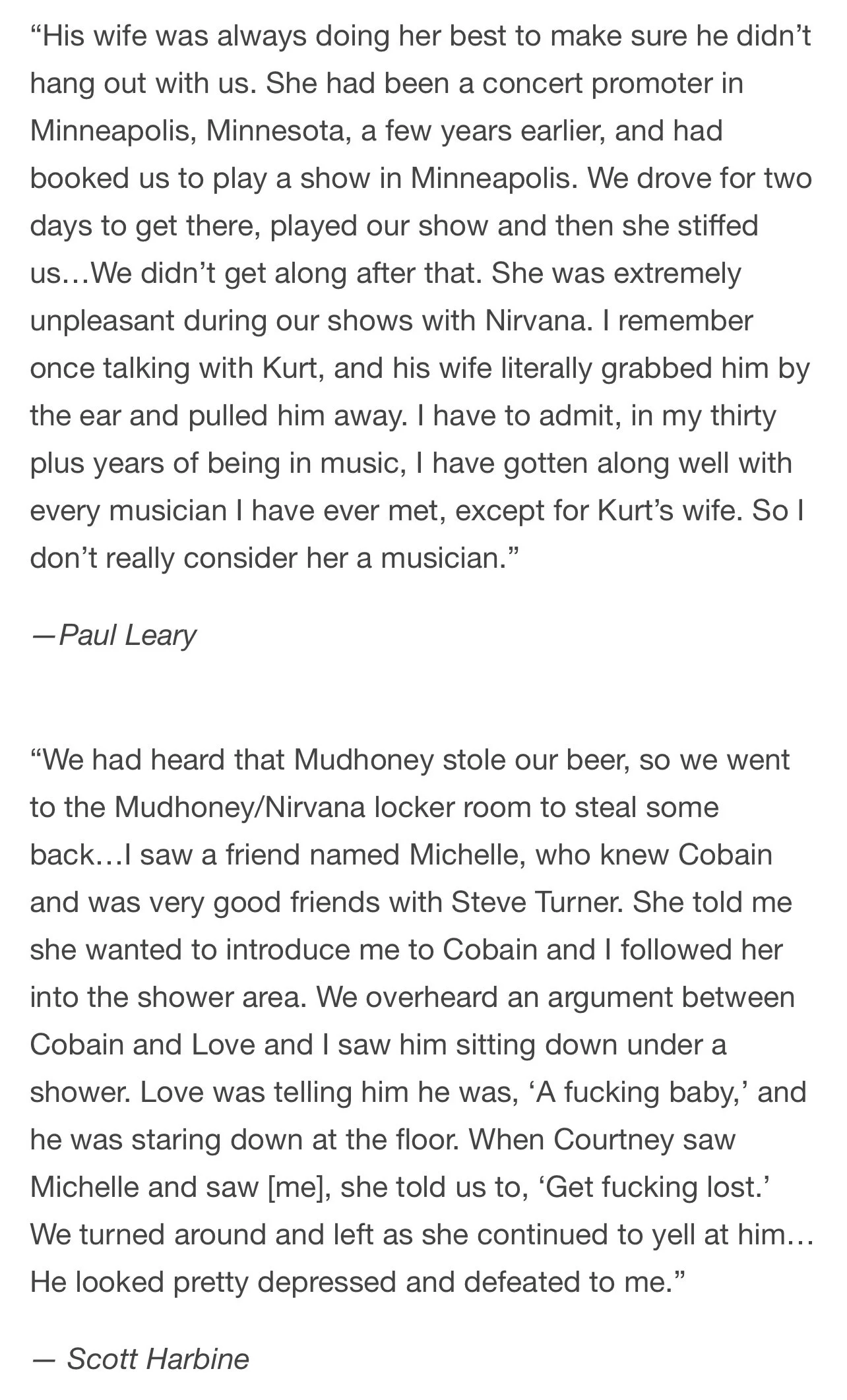
The Devastating + Brutal Isolation of Kurt Cobain
⸻
In the final years of his life, Kurt Cobain became increasingly isolated from the people who had known him longest — particularly friends from Olympia and Aberdeen who had supported him before fame, money, or power dynamics entered the picture. Multiple witnesses have described a gradual but deliberate narrowing of Kurt’s social world, where long‑standing relationships were discouraged, disrupted, or outright blocked. This kind of isolation is a well‑documented tactic in coercive control dynamics: separate the individual from those who know them best, and replace those voices with ones that reinforce dependence.
Former friends have described being frozen out, ignored, or told Kurt didn’t want to see them — even when they believed that wasn’t true. At the same time, his inner circle shifted dramatically. People with long histories of sobriety, shared values, or emotional grounding were replaced by individuals tied closely to Courtney Love, or by people actively struggling with addiction themselves. The result was an environment where Kurt’s vulnerability was amplified, not protected — and where dissenting voices were absent.
Several figures who gained proximity during this period have been described by witnesses as acting less like friends and more like handlers or informants — people who reported on Kurt’s behavior, movements, and conversations. Names frequently cited include Cali DeWitt and Pat Smear, whose roles have been questioned not for their artistry, but for their proximity and silence during critical moments. Whether intentional or not, this network functioned as a buffer between Kurt and the people who might have challenged the narrative forming around him.
This pattern mirrors what psychologists recognize in cult‑like or coercively controlled relationships: isolate the target, discredit outsiders, surround them with loyalists, and control the flow of information. Over time, the individual becomes increasingly dependent on the very person orchestrating the isolation — not because they lack strength, but because every alternative support system has been systematically removed.
By the time Kurt died, he was largely cut off from the community that had shaped him — replaced with a curated circle that benefited from access, proximity, or control. Whether labeled abuse, coercive control, or manipulation, the outcome was the same: a profoundly isolated man, surrounded by people who did not protect him — and separated from those who might have.
⸻